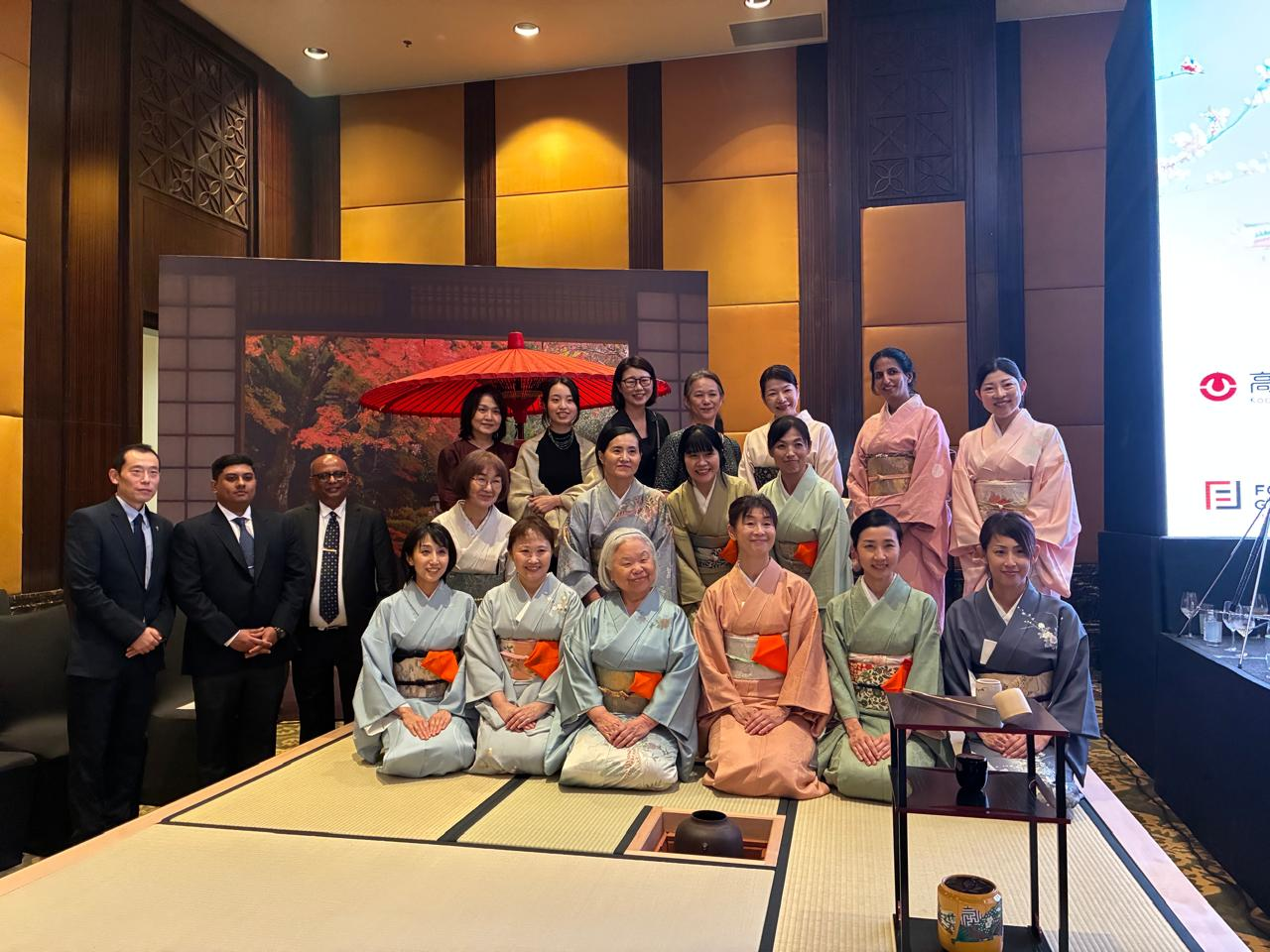
The Art of ZEN ~Live Tatami Crafting~
Building a Cultural Bridge Between Kyoto and Bangalore
Overview
In late 2025, I was involved in organizing and executing a three part Japanese cultural event series in Bangalore titled The Art of ZEN ~Live Tatami Crafting~. What began as a cultural interest eventually evolved into a full scale market validation effort for authentic Kyoto tatami craftsmanship in India.
My official title on paper was Product Designer. In practice, I handled planning, digital infrastructure, exhibition flow, cross cultural coordination, logistics ownership, and on site operations across two venues.
Where It Began
My relationship with Japanese culture did not begin with tatami. It began years earlier through university Japanese language studies and a deep curiosity about Japan. In 2024, I travelled across Tokyo and regional towns with a deliberate intention: live quietly, observe, and understand daily rhythms rather than move as a tourist.
I was particularly influenced by the philosophy of material authenticity. Long before this project, I had followed Takashi Amano and the discipline behind aquascaping. Visiting Niigata to see his final installation reinforced something important for me — craftsmanship is not decorative, it is structural. It shapes space, movement, and feeling.
That perspective later shaped how I approached tatami not as flooring, but as spatial architecture.


From Software to Craft
Before any physical event took place, I built a software system to solve a practical problem. Traditional interior rendering cycles take 7 to 10 days for a single iteration. That pace is incompatible with exploratory cultural markets.
I trained a visualization workflow using tatami product datasets from our partner company. A potential client could share a room photograph from their mobile phone, and within roughly 12 seconds we could generate a Japanese tatami integrated interior mockup. Instead of abstract explanations, we could show possibility instantly.
This became a strategic validation tool. If someone attended the event and expressed curiosity, they could leave with a visualization of their own space transformed.
The Partnership
Through networking efforts I met Urayama san, a Kyoto carpenter deeply rooted in traditional craftsmanship. We shared a curiosity: could authentic tatami craftsmanship find resonance in India?
To test that question, three events were organized in Bangalore. Two were held at the GRIPSINDIA office and one at The Chancery Hotel, Walton Room. Nishiwaki san, a highly regarded tatami craftsman, travelled from Kyoto to construct a tatami stage live. Noda san, appointed from Kyoto for cultural oversight, collaborated closely on exhibition accuracy and presentation.
We also partnered with a tea ceremony group in Bangalore led by Japanese and Indian practitioners. The Chancery event became especially significant — traditional tea was served on the very tatami stage constructed during the workshop.
Building the Digital Backbone
Time was limited. Printing and distributing physical posters was unrealistic. So I built the website in advance and positioned it as the central source of truth. The design followed Japanese white space principles while adapting kimono inspired color tones more familiar to Indian audiences.
The website included a refined Japan to English content review loop. I coordinated closely with Urayama san to ensure no phrasing felt culturally misrepresented. Even small visual decisions, such as the kimono welcome imagery, were reviewed carefully.
Eventbrite pages were created to estimate attendance and capture visitor data. A WhatsApp group served as a lightweight communication layer. I handled participant queries directly, clarifying schedules and expectations. With a simple link, the event could spread organically across interested communities.
The Chancery Hotel event ultimately drew over 100 attendees.
The Exhibition
At GRIPSINDIA, we created an exhibition explaining tatami making through its tools. Noda san designed the tool information sheets. I printed and physically structured the display.
The arrangement followed production sequence rather than aesthetic grouping. Visitors could trace the lifecycle of a tatami mat through tool order. I requested wood shavings from Urayama san so guests could physically feel the output of the finishing tools.
Most visitors spent five to ten minutes at the exhibition, engaging directly with the objects rather than passively observing.
Logistics Under Constraint
The most fragile part of the operation was transport. The tatami stage panels contained fine wooden notches. Damage would result in uneven assembly.
The rental truck did not have anchoring belts. Urayama san needed to pick up Ohga sensei, the tea ceremony master. That meant material transport became my full responsibility.
I travelled in the truck with Nishiwaki san. Throughout the journey, we manually stabilized the panels and mats, constantly adjusting corner alignment to prevent impact damage.
We were given a 90 minute window to unload and prepare the venue. We completed it in 70 minutes. No materials were damaged. The stage assembled cleanly.
On Site Flow
I developed floor plans for both venues to ensure smooth visitor movement. At The Chancery Hotel, this included coordinating with hotel staff for table placements, signage, and queue formation for the tea ceremony.
During peak hours I guided visitors through the sequence of activities. The goal was not only to host, but to preserve the atmosphere of calm central to the experience.
After the event concluded, I updated the website to reflect closure and added a gallery documenting the execution.
Beyond the Initial Events
The collaboration extended further. In February 2026, the tea ceremony group was invited to serve at the Emperor’s Birthday reception at The Ritz Carlton Bangalore under Japanese Embassy organization. The cultural continuity reinforced that this was not an isolated experiment but part of a broader bridge.
What This Built
The project was never just about three workshops. It was a structured market probe. We studied rush grass import regulations and plant quarantine requirements. We measured audience reaction. We observed who lingered, who asked questions, and who imagined tatami inside their own homes.
The next phase focuses on B2B collaboration with architects and interior designers, followed by full room Japanese interior execution. Long term, the ambition is to introduce small batch artisan craftsmanship directly to Indian homes.
This initiative established something more foundational than sales. It built a repeatable framework for cross border cultural execution — combining craftsmanship, digital enablement, logistics discipline, and contextual sensitivity.